Showing posts with label Algorithms. Show all posts
Showing posts with label Algorithms. Show all posts
Friday, July 17, 2015
Introduction to Algorithms, Second Edition Ebook: By free-manual.blogspot.com(Free Books and manual Manual,Free eBooks,BSCS,BCS,Free Downloadable Books)

The updated new edition of the classic Introduction to Algorithms is intended primarily for use in undergraduate or graduate courses in algorithms or data structures. Like the first edition, this text can also be used for self-study by technical professionals since it discusses engineering issues in algorithm design as well as the mathematical aspects.
In its new edition, Introduction to Algorithms continues to provide a comprehensive introduction to the modern study of algorithms. The revision has been updated to reflect changes in the years since the book’s original publication. New chapters on the role of algorithms in computing and on probabilistic analysis and randomized algorithms have been included. Sections throughout the book have been rewritten for increased clarity, and material has been added wherever a fuller explanation has seemed useful or new information warrants expanded coverage.
This part will get you started in thinking about designing and analyzing algorithms. It is intended to be a gentle introduction to how we specify algorithms, some of the design strategies we will use throughout this book, and many of the fundamental ideas used in algorithm analysis. Later parts of this book will build upon this base. Chapter 1 is an overview of algorithms and their place in modern computing systems. This chapter defines what an algorithm is and lists some examples. It also makes a case that algorithms are a technology, just as are fast hardware, graphical user interfaces, object-oriented systems, and networks. In Chapter 2, we see our first algorithms, which solve the problem of sorting a sequence of n numbers. They are written in a pseudocode which, although not directly translatable to any conventional programming language, conveys the structure of the algorithm clearly enough that a competent programmer can implement it in the language of his choice. The sorting algorithms we examine are insertion sort, which uses an incremental approach, and merge sort, which uses a recursive technique known as “divide and conquer.” Although the time each requires increases with the value of n, the rate of increase differs between the two algorithms. We determine these running times in Chapter 2, and we develop a useful notation to express them. Chapter 3 precisely defines this notation, which we call asymptotic notation. It starts by defining several asymptotic notations, which we use for bounding algorithm running times from above and/or below. The rest of Chapter 3 is primarily a presentation of mathematical notation. Its purpose is more to ensure that your use of notation matches that in this book than to teach you new mathematical concepts.
DOWNLOAD HERE

Despeckle Filtering Algorithms and Software for Ultrasound Imaging: By free-manual.blogspot.com(Free Books and manual Manual,Free eBooks,BSCS,BCS,Free Downloadable Books)

Despeckle Filtering Algorithms and Software forUltrasound Imaging
Product Description
It is well-known that speckle is a multiplicative noise that degrades image quality and the visual evaluation in ultrasound imaging. This necessitates the need for robust despeckling techniques for both routine clinical practice and teleconsultation. The goal for this book is to introduce the theoretical background (equations), the algorithmic steps, and the MATLAB™ code for the following group of despeckle filters: linear filtering, nonlinear filtering, anisotropic diffusion filtering and wavelet filtering. The book proposes a comparative evaluation framework of these despeckle filters based on texture analysis, image quality evaluation metrics, and visual evaluation by medical experts, in the assessment of cardiovascular ultrasound images recorded from the carotid artery. The results of our work presented in this book, suggest that the linear local statistics filter DsFlsmv, gave the best performance, followed by the nonlinear geometric filter DsFgf4d, and the linear homogeneous mask area filter DsFlsminsc. These filters improved the class separation between the asymptomatic and the symptomatic classes (of ultrasound images recorded from the carotid artery for the assessment of stroke) based on the statistics of the extracted texture features, gave only a marginal improvement in the classification success rate, and improved the visual assessment carried out by two medical experts. A despeckle filtering analysis and evaluation framework is proposed for selecting the most appropriate filter or filters for the images under investigation. These filters can be further developed and evaluated at a larger scale and in clinical practice in the automated image and video segmentation, texture analysis, and classification not only for medical ultrasound but for other modalities as well, such as synthetic aperture radar (SAR) images. Table of Contents: Introduction to Ultrasound Imaging / Despeckle Filtering Algorithms / Evaluation Methodology / Applications of Despeckle Filtering in Ultrasound Imaging / Comparison and Discussion of Despeckle Filtering Algorithms / Summary and Future Directions
TO DOWNLOAD FOLLOW THE LINK BELOW:
Fundamentals of Wavelets: Theory, Algorithms, and Applications (Wiley Series in Microwave and Optical Engineering): By free-manual.blogspot.com(Free Books and manual Manual,Free eBooks,BSCS,BCS,Free Downloadable Books)

Wavelet theory originated from research activities in many areas of science and engineering. As a result, it finds applications in a wide range of practical problems. Wavelet techniques are specifically suited for nonstationary signals for which classic Fourier methods are ineffective.
Based on courses taught by the authors at Texas A&M University as well as related conferences, Fundamentals of Wavelets is a textbook offering an up-to-date engineering approach to wavelet theory. It balances a discussion of wavelet theory and algorithms with its far-ranging practical applications in signal processing, image processing, electromagnetic wave scattering, and boundary value problems.
to download follow the link below:
Thursday, July 16, 2015
Localization Algorithms and Strategies for Wireless Sensor Networks: By free-manual.blogspot.com(Free Books and manual Manual,Free eBooks,BSCS,BCS,Free Downloadable Books)
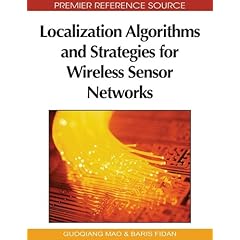
Localization Algorithms and Strategies for Wireless Sensor Networks
Product Description
Wireless localization techniques are an area that has attracted interest from both industry and academia, with self-localization capability providing a highly desirable characteristic of wireless sensor networks. Localization Algorithms and Strategies for Wireless Sensor Networks encompasses the significant and fast growing area of wireless localization techniques. This book provides comprehensive and up-to-date coverage of topics and fundamental theories underpinning measurement techniques and localization algorithms. A useful compilation for academicians, researchers, and practitioners, this Premier Reference Source contains relevant references and the latest studies emerging out of the wireless sensor network field.
to download follow the link below:
Algorithms, Data Structures, and Problem Solving With C++: By free-manual.blogspot.com(Free Books and manual Manual,Free eBooks,BSCS,BCS,Free Downloadable Books)
Mark Allen Weiss, «Algorithms, Data Structures, and Problem Solving With C++»
Addison Wesley | ISBN: 0805316663 | 1996 | PDF | 820 pages | 1.57 MB
| “ | This book was designed for a second course in computer science, which has typically been known as CS-2 Data Structures. The | ” |
to download follow the link below:
Subscribe to:
Posts (Atom)